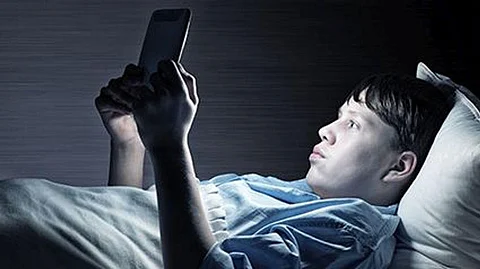
THURSDAY, Nov. 19, 2026 (HealthDay News) — It’s happened to us all: You’re poised to go to sleep, but a “digital distraction” keeps you up hours later than planned.
“Bedtime procrastination is a common problem, as people often stay up later than intended while binge-watching a program or shopping online,” said sleep medicine physician Dr. Alexandre Abreu, a spokesperson for the American Academy of Sleep Medicine (AASM).
“With so many digital distractions vying for our time, it can be tempting to watch one more episode or scroll through one more viral video, but anything that keeps us from getting the recommended seven hours of sleep each night can be harmful to overall health and well-being,” he added in a news release.
A 2023 AASM survey pinpointed the scope of the problem: 91% of those surveyed said they have lost sleep because they stayed up past their bedtime to binge-watch a TV show.
Meanwhile, 75% said browsing and buying online are also keeping them up at night.
Temptation is rarely far away. Nearly 9 in 10 respondents (87%) said their smartphone stays in the bedroom overnight. And when sleep won’t come, half said they turn on the TV, while 45% reach for their phone, the release reported.
Newer federal data show how widespread short sleep has become. In 2024, about 3 in 10 U.S. adults (30.5%) got less than seven hours of sleep in a typical 24-hour period, the National Center for Health Statistics (NCHS) reported in April.
Many people also struggle to drift off or stay asleep. The report found that about 15% of adults had trouble falling asleep on most days or every day over the past month, and 18% had trouble staying asleep. Only a little more than half (54.8%) said they usually woke up feeling well-rested.
Women fared worse than men. They were more likely to report trouble falling asleep (18.5% versus 12.2 %) and staying asleep (21.4% versus 14.6%), and less likely to wake up refreshed.
Trouble falling asleep was most common among the youngest adults (ages 18 to 34) and became less common with age.
The AASM offered some guidance on how to keep digital disruptions at bay and sleep better in the process.
Disconnect from devices at night: Turn off all electronics at least 30 minutes to an hour before bedtime.
Leave your phone in another room: It’s tempting to use your phone in bed, so keep it in a separate room at night. If you use your phone for a morning alarm, consider an alarm clock instead.
Follow a relaxing nighttime routine: Take a warm bath or shower, read a book or do some journaling before bed.
Keep a sleep schedule: Go to bed and get up at the same time each day. Don’t let online scrolling cut into precious hours of sleep.
Turn off push notifications: If you must have your phone in your bedroom at night, turn off push notifications and sound to avoid distracting alerts.
More information
Visit the U.S. Centers for Disease Control and Prevention for more about sleep.
SOURCES: National Center for Health Statistics, April 29, 2026; American Academy of Sleep Medicine, news release, Dec. 4, 2023