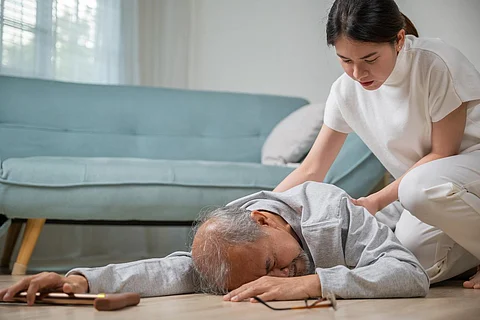

Key TakeawaysMonitoring blood pressure at home could help prevent falls among the elderlySeniors with “masked” high blood pressure have a 70% higher risk of fallsThose with lower blood pressure at home compared to a doctor’s office have a decreased risk of falls.MONDAY, Oct. 12, 2026 (HealthDay News) — Monitoring blood pressure at home could help prevent a life-altering injury for some seniors, a new study warns.Seniors older than 78 with “masked” high blood pressure have a 70% higher risk of falls than those who’ve been properly diagnosed, according to results presented at the American Heart Association’s annual meeting on hypertension.Researchers said masked high blood pressure involves seniors’ readings appearing normal at a doctor’s office but consistently high at home.“These findings highlight that, in addition to office blood pressure measurement, home blood pressure readings can be an important way to identify hidden home high blood pressure and risk of falls in older adults,” lead investigator Frances Wang said in a news release. She is a researcher at Beth Israel Deaconess Medical Center in Boston.Changes in blood pressure can increase fall risk by causing dizziness or fainting, according to the American Heart Association (AHA).The findings were based on data from more than 750 older adults who participated in a long-term heart disease risk study. The participants were between 78 and 98 years old.Researchers also compared falls among people with “masked” high blood pressure to those of patients with “white coat” high blood pressure. "White coat" blood pressure readings are high at a doctor’s office but low when measured at home.Among the participants, 17% had white coat high BP, 15% had masked high BP and 33% had normal blood pressure readings.For each person, multiple blood pressure readings were taken at home and in a doctor’s office.After about a year, nearly one in four people (23%) had fallen at least once, researchers said.People with masked high blood pressure had a 70% higher rate of falls, while those with white coat high BP had a 39% lower risk of falls.“Home blood pressure measurement can add helpful health information for older adults and, as shown in findings from prior studies, for most of the general public,” Wang said. “We hope that older adults, their family members and caregivers will feel empowered to measure blood pressure regularly at home and share this data with their health care team to help inform their blood pressure and overall healthcare plan.”AHA volunteer expert Dr. Karol Watson agreed that the study findings “confirm that ‘normal’ office blood pressure isn’t always the end of the story.”“This deserves a closer look because falls can often accelerate decline in both physical and mental function for patients when physical independence is lost,” Watson, chair of medicine at the David Geffen School of Medicine at UCLA, said in a news release.“This study doesn't explain why the fall risk was higher, but it may be telling us something about blood pressure variability and how well older adults are able to regulate their blood pressure (or not) throughout the day,” Watson said. “Reducing the risk of falls should be a routine consideration, particularly in older adults with high blood pressure.”Researchers presented their findings Oct. 9 at the AHA meeting, which took place in Arlington, Virginia. Results reported at medical meetings should be considered preliminary until published in a peer-reviewed journal.More informationThe American Heart Association has more on heart problems and fall risk among seniors.SOURCE: American Heart Association, news release, Oct. 9, 2026.What This Means For YouSeniors can inform their doctors of home blood pressure measurements to potentially lower their risk of falling..Sign up for our weekly HealthDay newsletter