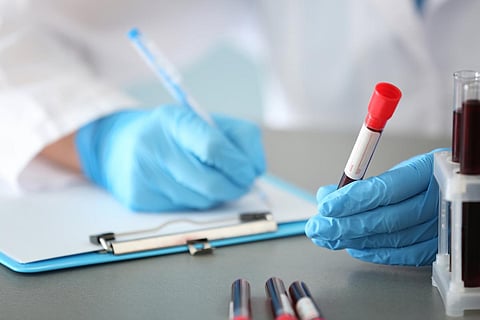

Key TakeawaysA simple blood test may be able to stage Alzheimer's diseaseUnlike brain scans or spinal taps, a blood test would be less invasive, less expensive and potentially available to more patientsEarlier detection and staging could improve treatment decisions.TUESDAY, June 2, 2026 (HealthDay News) — Scientists may be one step closer to staging Alzheimer's disease with a simple blood test.The test could offer a cheaper, less invasive alternative to brain scans and spinal taps now used to diagnose and determine the extent of disease.Researchers developed a model that uses just two forms of tau protein in the blood to track Alzheimer's progression. They tried it on more than 1,000 patients, including people who were cognitively unimpaired, patients with mild cognitive impairment, patients with Alzheimer's dementia and people with other neurodegenerative diseases.The result: Staging from the blood model closely matched the accuracy of PET brain scans.Dr. Randy D’Amico, director of the Brain and Spine Metastasis Program of Neurosurgery at Northwell Lenox Hill Hospital in New York City, was not part of the research team, but reviewed the findings."If the data hold up in bigger studies, … I think it can really dramatically expand access to biological Alzheimer's testing, which is a big deal," he said.The blood test could help doctors detect and stage Alzheimer's earlier — similar to cancer staging, D’Amico said. "And with better staging, that means you can better select targets for therapies … and you might actually be able to prevent irreversible brain damage or at least expect better outcomes," he said.Future studies will need to confirm how well the blood test performs in larger and more diverse patient populations.The study was published May 26 in JAMA Neurology.More informationThe Alzheimer's Association has more on Alzheimer's disease.SOURCE: HealthDay TV, June 2, 2026 .What This Means For YouA new blood test that measures two tau proteins may be able to accurately show how advanced Alzheimer's disease is, offering a simpler, less invasive and more accessible alternative to brain scans and spinal taps..Sign up for our weekly HealthDay newsletter