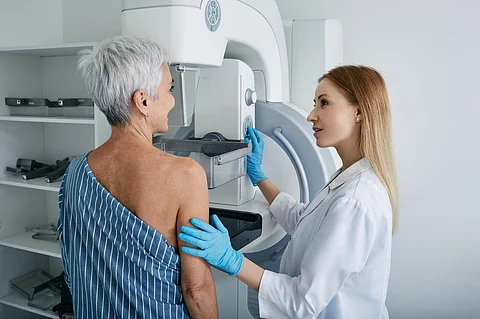

TUESDAY, March 17, 2026 (HealthDay News) -- Among rural-residing women, there are sharp differences in stage of breast cancer diagnosis, according to a study published online March 11 in the Journal of the American College of Surgeons.Omolade O. Sogade, M.D., and Julie A. Margenthaler, M.D., from Washington University in St. Louis, sought to identify factors associated with advanced-stage breast cancer presentation among 52,287 patients with breast cancer residing in rural areas identified from the National Cancer Database (2004 to 2021).The researchers found that 13.6 percent of patients were diagnosed at advanced stages. Risk of later-stage diagnosis was significantly higher among non-Hispanic Black patients versus non-Hispanic White patients (stage 2: odds ratio [OR], 1.4; stage 3: OR, 1.58; stage 4: OR, 1.29). Higher risk of stage 3 breast cancer was also seen among Hispanic patients versus non-Hispanic patients (OR, 1.5). Progressively higher risk of advanced-stage diagnosis was seen among uninsured patients versus insured patients (stage 2: OR, 1.37; stage 3: OR, 2.06; stage 4: OR, 3.88). Compared to the West North Central region (Iowa to the Dakotas) as a statistical reference point, the researchers found that women in the East South Central region (Alabama, Kentucky, Mississippi, Tennessee) were ~34 percent more likely to be diagnosed with stage 4 breast cancer, while women in the West South Central region (Arkansas, Louisiana, Oklahoma, Texas) were ~33 percent more likely to receive a Stage 4 breast cancer diagnosis."We found the highest rates of disparities in the South, and that even among different rural regions across the country, a woman’s geographic residence was one important factor impacting her risk of being diagnosed with advanced-stage breast cancer," Sogade said in a statement.Abstract/Full Text (subscription or payment may be required).Sign up for our weekly HealthDay newsletter