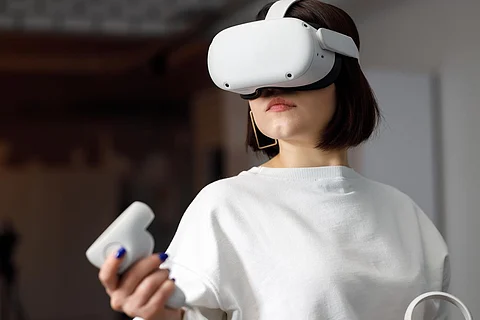

TUESDAY, Sept. 29, 2026 (HealthDay News) -- The combination of virtual reality (VR) and classical music seems to accelerate early blood pressure reduction in patients with hypertensive urgency receiving standard antihypertensive treatment, according to a study presented at the European Emergency Medicine Congress, held Sept. 25 to 27 in Paris.Safa Donmez, M.D., from the University of Health Sciences in Ankara, Turkey, and colleagues examined the effects of VR combined with classical music intervention on mean arterial pressure (MAP) and anxiety levels in adults with hypertensive urgency. Standard antihypertensive treatment was provided to all patients, and the intervention group was exposed to a natural environment simulation via VR goggles accompanied by classical music.The researchers found that the mean MAP values were 138.11, 126.44, 119.07, 111.79, 104.72, and 102.32 at baseline, 15, 30, 60, 90, and 120 minutes, respectively, while the corresponding values were 132.64, 116.34, 112.80, 110.97, 107.18, and 103.69 in the VR group. At 15 and 30 minutes, the MAP values were significantly lower in the VR group, while there were no significant differences at later time points. The MAP reduction was greater in the VR group at 15 minutes, while greater reductions were seen at 90 and 120 minutes in the control group. In an analysis of the percentage MAP change, the VR group had a greater reduction at 15 minutes, while greater reductions were seen in the control group at 90 and 120 minutes. The changes in the State Anxiety Inventory values were 4.0 and 8.0 in the control and VR groups, respectively."The diminishing effect over time suggests that intervention supports early stabilization rather than long-term control of blood pressure," Donmez said in a statement.Press ReleaseMore Information.Sign up for our weekly HealthDay newsletter