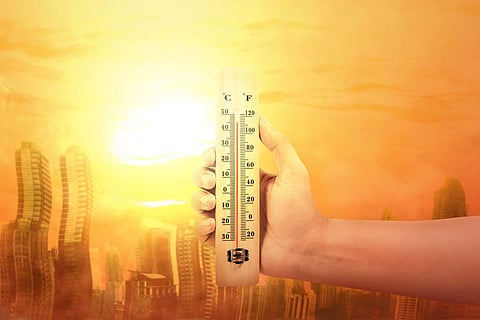

TUESDAY, April 21, 2026 (HealthDay News) -- Extreme weather may increase the risk of cardiovascular disease, according to a study published online April 21 in the American Journal of Preventive Medicine.Linjiang Wei, Ph.D., from Xiamen University in China, and colleagues explored the spatiotemporal patterns of three extreme climate event types (heat ≥38 C; cold ≤10 C; precipitation >50 mm) in 157 Chinese cities (2015 to 2020) and examined their causal effects on individual incident cardiovascular disease risk.The researchers found that Northeast China's cities had increased cardiovascular disease incidence, with heat extreme climate events increasing city-level cardiovascular disease prevalence. There was a correlation between each additional heat extreme climate event day and 1,128 more cardiovascular disease cases per 100,000 people. There was also an increase in cardiovascular disease prevalence with cold extreme climate events, with each additional cold extreme climate event day correlated with 391 more cardiovascular disease cases per 100,000 people. In causal inference analysis, each heat extreme climate event day increased cardiovascular disease risk by 3.044 percent, while cold extreme climate event days increased risk by 0.110 percent, and precipitation extreme climate event days increased it by 1.620 percent. Cold extreme climate events posed higher risk for preretirees, those with high body mass index, and people living in high-ozone areas, whereas higher impact of precipitation extreme climate events was seen for older adults, rural residents, preretirees, and unmarried individuals."Climate change is not just an environmental issue; it is a key factor affecting population health, for which urgent interdisciplinary action is required," Wei said in a statement. "Older adults are more vulnerable due to age-related physiological decline and underlying diseases."Abstract/Full Text.Sign up for our weekly HealthDay newsletter