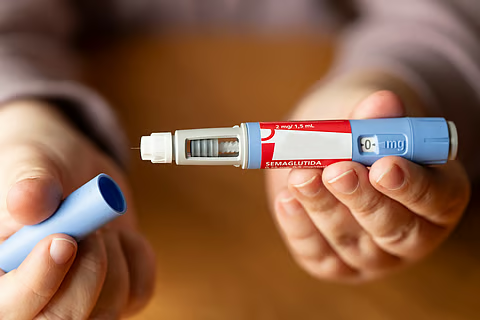

TUESDAY, Feb. 10, 2026 (HealthDay News) -- Lowering the annual cost of semaglutide by 18 percent (from $8,604 to $7,055) or making the current cash price available to all patients would make semaglutide cost-effective, according to a study published online Feb. 4 in JAMA Cardiology.Susan Hennessy, Ph.D., from the University of California, San Francisco, and colleagues examined whether semaglutide is cost-effective in U.S. adults with overweight or obesity and cardiovascular disease (CVD) but without diabetes. The simulation evaluated the addition of lifetime treatment with weekly subcutaneous semaglutide ($8,604 annually) to usual care versus usual care alone in approximately 4 million U.S. adults aged 45 years and older with a body mass index ≥27 and history of myocardial infarction or stroke without diabetes.The researchers found that adding semaglutide to usual care for U.S. adults without diabetes eligible for secondary prevention of CVD is projected to avert an estimated 358,400 major adverse cardiovascular events at a cost of $148,100 per quality-adjusted life-year (QALY) gained. Treatment with semaglutide was estimated to add $23 billion to annual health care spending. At a threshold of $120,000 per QALY gained, semaglutide would be cost-effective at an annual cost of $7,055 (18 percent lower). At the cash price currently available to self-paying customers ($5,988; incremental cost-effectiveness ratio), semaglutide is cost-effective ($99,600 per QALY gained). "Semaglutide and other high-potency GLP-1 agonists are once-in-a-generation breakthroughs that have the potential to transform the cardiometabolic health of the U.S. population," senior author Dhruv S. Kazi, M.D., from the Beth Israel Deaconess Medical Center in Boston, said in a statement. "We must ensure that they are affordable and accessible to all patients who can benefit from them, ideally at a price that reflects the value they generate for our health system and society at large."One author disclosed ties to the pharmaceutical industry.Abstract/Full Text (subscription or payment may be required).Sign up for our weekly HealthDay newsletter