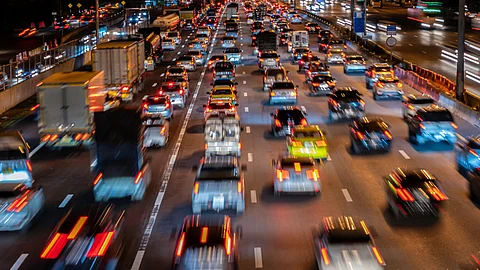

THURSDAY, Feb. 19, 2026 (HealthDay News) -- Nighttime road traffic noise exposure is associated with alterations in blood cholesterol and lipid profiles in adults, according to a study published in the March 1 issue of Environmental Research.Yiyan He, from University of Oulu in Finland, and colleagues investigated the relationships between nighttime road traffic noise and 155 systemic metabolic biomarkers (including lipids, lipoproteins, fatty acids, and other low-molecular-weight metabolites). The analysis included 272,229 European adults (aged 31 years and older) identified from the U.K. Biobank, the Rotterdam Study, and the Northern Finland Birth Cohort 1966.The researchers found that in the discovery analysis, nighttime road traffic noise (≥55 dB versus <45 dB) was associated with higher levels of 48 metabolites in the U.K. Biobank. In a meta-analysis and sensitivity analysis, associations for 20 metabolites remained robust. There was an association between noise (≥55 dB) and higher circulating concentrations of cholesterol-related biomarkers, including lipids in esterified cholesterol-enriched lipoproteins such as low-density lipoprotein and intermediate-density lipoprotein, as well as unsaturated fatty acids and membrane biomarkers. There was a monotonic exposure-response pattern for noise ≥50 dB and the biomarkers, except for two unsaturated fatty acids."Our findings suggest that nighttime traffic noise may subtly but consistently affect metabolic health," He said in a statement. "While the changes in cholesterol and lipid levels for any one individual are small, traffic noise affects a very large number of people, which means the potential public health impact could be substantial."Abstract/Full Text.Sign up for our weekly HealthDay newsletter