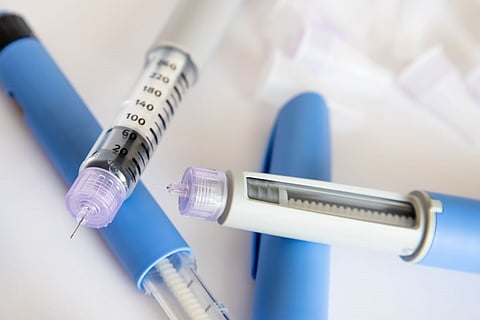

MONDAY, March 2, 2026 (HealthDay News) -- For people with chronic migraine (CM), taking glucagon-like peptide-1 receptor agonists (GLP-1 RAs) is associated with fewer emergency department visits and hospitalizations overall and less need for medications used to stop and prevent migraine attacks, according to a study scheduled for presentation at the annual meeting of the American Academy of Neurology, to be held from April 18 to 22 in Chicago.Vitoria Acar, from the University of Sao Paulo in Brazil, and colleagues compared health care utilization, triptan use, and preventive-treatment escalation following initiation of a GLP-1 RA versus topiramate in adults with CM. The analysis included 10,997 adults with CM initiating a GLP-1 RA (liraglutide, semaglutide, dulaglutide, exenatide, lixisenatide, or albiglutide) within 12 months of diagnosis, as well as matched adults initiating topiramate.The researchers found that compared with topiramate, GLP-1 RA initiators had a lower risk for emergency department visits (risk ratio [RR], 0.90), hospitalizations (RR, 0.86), nerve blocks (RR, 0.87), and triptan use (RR, 0.87). GLP-1 RA initiators also had a lower risk for initiation of tricyclic antidepressants (RR, 0.65), valproate (RR, 0.52), gepants (RR, 0.77), calcitonin gene-related peptide monoclonal antibodies (RR, 0.58), and serotonin-norepinephrine reuptake inhibitors (RR, 0.80). For beta-blocker initiation, there were no significant differences observed."Seeing these patterns of lower use of emergency care and lower use of drugs to stop migraines or trying additional drugs to prevent migraines among people taking GLP-1 drugs for other conditions suggests that these therapies may help stabilize the disease burden in ways that we haven’t fully appreciated yet," Acar said in a statement.Press ReleaseMore Information.Sign up for our weekly HealthDay newsletter