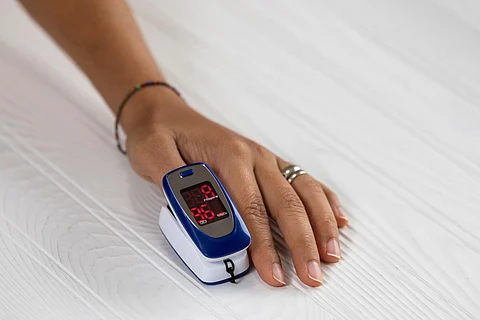

TUESDAY, Jan. 20, 2026 (HealthDay News) -- Patients with darker skin tones have peripheral oxygen saturation (SpO2) readings that are higher than patients with a lighter skin tone, according to a study published online Jan. 14 in The BMJ.Daniel S. Martin, Ph.D., from Peninsula Medical School at the University of Plymouth in the United Kingdom, and colleagues examined the impact of skin tone on the measurement and diagnostic accuracy of five fingertip pulse oximeters used by patients in the National Health Service England COVID Oximetry @home scheme. A total of 903 critically ill adults at 24 intensive care units in England between June 2022 and August 2024 were included. Pulse oximetry-derived SpO2 measurements were compared to the gold standard of paired arterial oxygen saturation (SaO2) measurements from arterial blood analyzed by co-oximetry.A total of 11,018 paired SpO2-SaO2 measurements were included in the analysis. The researchers found that all tested pulse oximeters overestimated and underestimated at lower and higher values of SaO2, respectively. For patients with darker skin tone, SpO2 readings were 0.6 to 1.5 percentage points higher on average than for patients with lighter skin tone. False-negative rates increased with darker skin tones at both SpO2 thresholds assessed; the proportion of SpO2 measurements >94 percent despite a paired SaO2 ≤92 percent varied from 5.3 to 35.3 percentage points higher for patients with darker versus lighter skin tones (7.6 to 62.2 versus 1.2 to 26.9 percent; rate ratio, 2.3 to 7.1). With darker skin tones, false-positive rates decreased."These small variations in bias translated into substantial differences in false-positive and false-negative rates for detecting hypoxemia," the authors write.Abstract/Full TextEditorial.Sign up for our weekly HealthDay newsletter