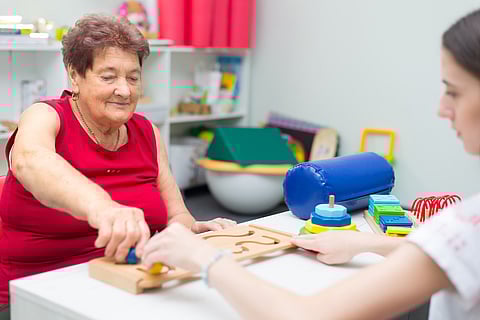

FRIDAY, Feb. 6, 2026 (HealthDay News) -- For patients with chronic stroke with severe paresis, targeted ipsilesional arm training significantly improves ipsilesional motor performance, according to a study published online Feb. 4 in JAMA Neurology.Candice Maenza, Ph.D., from the Penn State College of Medicine in Hershey, and colleagues examined whether training of the ipsilesional arm improves motor performance in chronic stroke with severe contralesional impairment and significant ipsilesional arm motor deficits in a parallel-group randomized clinical trial. Participants were randomly assigned to a five-week, 15-session intervention focused on the ipsilesional or contralesional upper limb (25 and 28 participants, respectively), composed of ipsilesional virtual reality and manipulation training or dose-matched, best practice contralesional arm therapy.The researchers found that in the modified intention-to-treat analysis, there was significant improvement in Jebsen-Taylor Hand Function Test performance in the ipsilesional treatment group (mean difference, −5.87 seconds), representing a 12 percent reduction in time to completion. Within the ipsilesional treatment group only, this improvement was sustained at the three-week and six-month follow-up times relative to its own baseline. For the remaining outcomes, no significant effects were observed."This randomized clinical trial provides novel evidence that ipsilesional arm training improves motor performance in patients with chronic stroke with severe hemiparesis and highlights the ipsilesional arm as a promising target of rehabilitation," the authors write.One author disclosed ties to the medical device industry and receipt of royalties from the second edition of Stroke Recovery and Rehabilitation.Abstract/Full Text (subscription or payment may be required).Sign up for our weekly HealthDay newsletter